

Halloween: Finding the Fun, Avoiding the Frenzy
October 28, 2026
Stigma & Shame: Helping Our Kids See Their Worth
By Carol S. Siege, PCC
Founder, Family Pathways Coaching, LLC
Stigma & Shame: Helping Our Kids See Their Worth
One of my sons was 12 years old when we met with the director of a weekend program we were considering joining. This conversation was the first time I heard my son talk about himself as the victim of stigma, and I was both surprised and impressed with his ability to articulate his irritation. We were meeting at a time not unlike the one we are experiencing now, when misinformation about vaccine safety had some parents questioning whether to protect their children against potentially fatal diseases or risk developing autism.
My son was angered on two levels. As a budding scientist, he was offended by parents who didn’t understand the difference between causation and correlation – that is, whether a drug causes a reaction or just happens to be given at the same time a symptom arises. On a more personal level, he was hurt by parents so afraid of their children developing autism that they would rather ignore proven science and risk contracting measles than ending up like him.
Stigma arises when people make assumptions and generalizations about conditions like autism or any other neurodiverse trait and ignore the person standing in front of them. Individuals can be pigeonholed or made to feel like an “other” rather than a valued member of a community. Stigma can lead to feelings of rejection and loneliness. And it can mean a loss of opportunities, as well, if people rely on stereotypes rather than an individual’s capabilities.
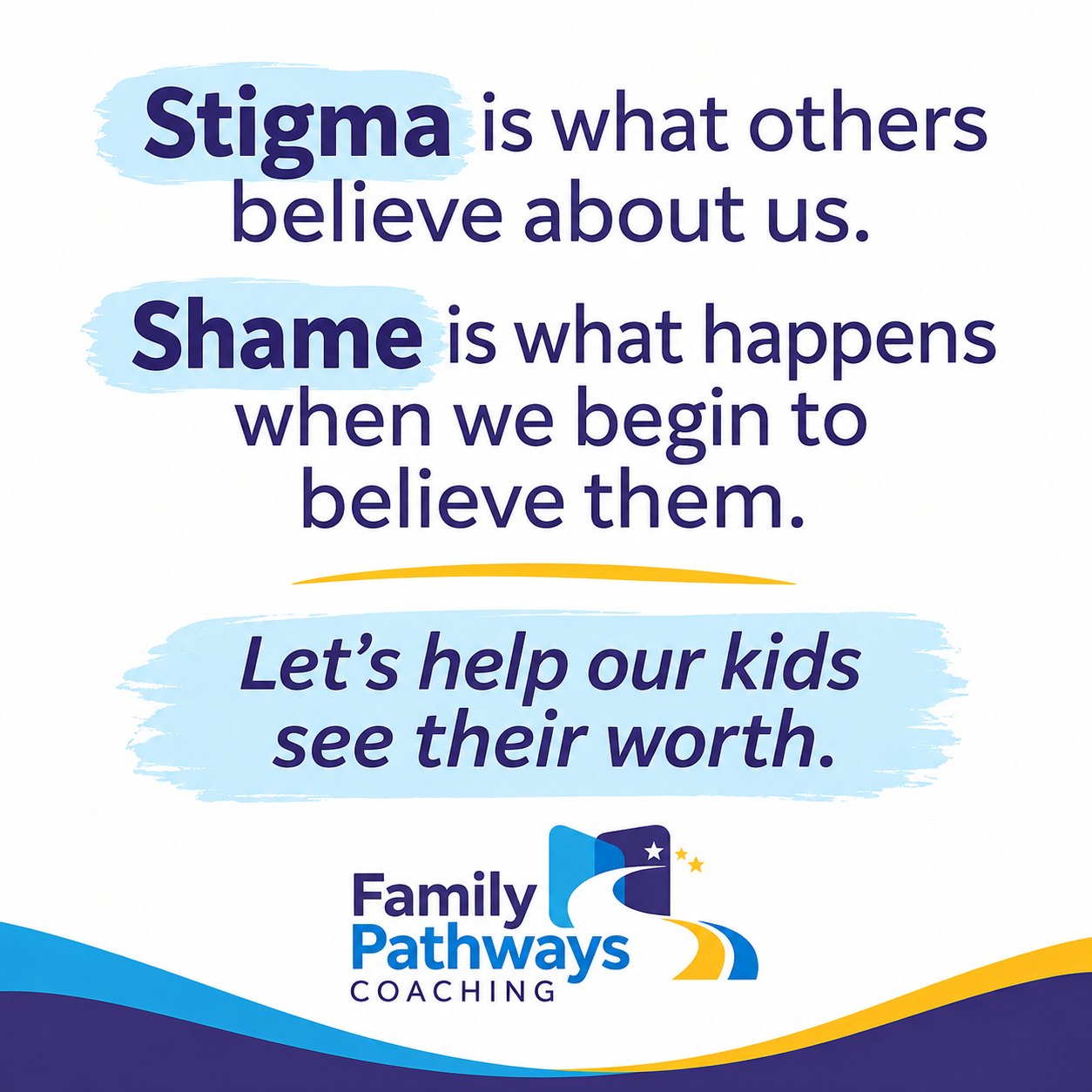
While stigma is about how others perceive us. Shame develops when we begin to internalize those judgments, believing that there is something wrong with who we are. For our neurodiverse kids, repeated experiences of being belittled or unappreciated can turn someone else's misconceptions into their own feelings of inadequacy.
I like to remind people that stigma reflects a misunderstanding, not one’s worth. Myths about ADHD, for example, abound. Some people believe incorrectly that ADHD shows up the same in all people, when in fact there are distinct types of ADHD. People sometimes make the flawed assumption that ADHD is the result of bad parenting or bad behavior or that people with ADHD could control themselves if they chose to. The truth? The ADHD brain is wired differently than other brains.
And yet, neurodiverse brains are not broken; they simply process information and experience the world differently. Your co-worker who struggles with time management and organization may also be a big picture thinker. Your relative who struggles to maintain attention during routine tasks may also hyperfocus in areas of interest. And your child who struggles with impulsivity and emotional dysregulation may also be enthusiastic and quick-thinking.
Rather than allowing our kids to fall victim to the shame or isolation that can come from stigma, we instead can challenge assumptions. We need to call out when someone is making unfair judgments about our kids’ abilities or worthiness. And we can teach our kids to do the same, helping build their confidence by reminding them of their strengths.
Challenging stigma begins with how we talk about neurodiversity, both to others and within our own families. Shedding the grip of shame requires something more: helping our kids recognize their capabilities without dismissing their struggles. Dr. Carol Dweck’s research on growth mindset reminds us that abilities are not necessarily fixed. With appropriate strategies, support, and practice, our kids can develop skills and build confidence.
Even as we champion our kids’ strengths, talents, and passions, we can introduce resilience by focusing on the process of learning and simultaneously accepting that differences exist. We don’t want to tell our kids, “You can do it if you want to,” which ignores true barriers and can lead to shaming. Instead, we can model positive ways of talking about differences. We can promote realistic, not magical, goals. We can get curious and ask what was hard, and what helped. As always, be gentle and validate emotions before encouraging effort.
Ultimately, moving past stigma begins with changing how we see and talk about neurodiversity. We can’t always control others’ beliefs, but we can help our kids understand that someone else’s assumptions do not define them. By recognizing their strengths, acknowledging their challenges, and emboldening them to advocate for themselves, we help our kids build the confidence to share their gifts with the world.
If you are struggling to help your child or you know someone who is, reach out! As a Certified Professional Coach with additional certification in ADHD parent coaching, I help parents understand their neurodiverse children’s needs and how to help the whole family succeed.